Olea europaea (Olive) Fruit Oil
Olive oil has been used for centuries as both a food and a topical oil, valued for its nourishing, protective, and emollient qualities. In traditional herbalism, olive oil is commonly chosen as a carrier for infusions because of its ability to extract and hold fat-soluble plant compounds while remaining gentle on the skin. It is often associated with the skin and connective tissues, supporting softness, resilience, and barrier function. As a base oil, it allows herbs to be delivered directly to the surface of the skin in a slow, sustained way. In this salve, olive oil serves as the foundation that carries the herbal infusions and supports calm, well-conditioned skin.
Plantago major (Plantain Leaf)
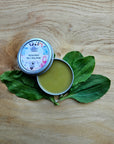
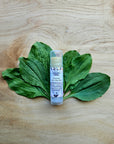
Plantain has a long history of topical use in traditional Western herbalism, particularly for irritated, itchy, or stressed skin. It is often described as soothing and drawing in nature, with an affinity for the skin and surface tissues. Traditionally, plantain is used to help calm reactivity and support the skin’s natural recovery processes after minor environmental stressors. Its gentle nature makes it a common choice in herbal preparations intended for frequent or family use. In this salve, plantain helps support comfort and balance when skin feels unsettled after bites or stings.
Achillea millefolium (Yarrow)
Yarrow has been traditionally used both internally and externally, with a strong historical association with the skin and circulatory system. In topical applications, it is valued for its toning and calming qualities, especially when skin feels hot, irritated, or reactive. Yarrow is often chosen in herbal formulations to support balance and resilience at the surface level. Its traditional energetics make it a thoughtful addition to preparations intended for sudden skin stress. Within this salve, yarrow contributes to a grounded, supportive herbal profile that aligns with soothing and recovery-focused use.
Hypericum perforatum (St. John’s Wort)
St. John’s wort infused oil has a long tradition of topical use, particularly for skin that feels sensitive, overstimulated, or uncomfortable. Traditionally, it is associated with the nervous system and is often chosen in external applications where calming and soothing support is desired. Herbalists have historically used St. John’s wort oil to support areas of the body that feel tender or unsettled after minor irritation. Its affinity for both the skin and nerve-rich tissues makes it a common choice in comfort-focused salves. In this formula, it helps round out the herbal infusion with a deeply grounding, supportive presence.
Simmondsia chinensis (Jojoba) Seed Oil
Jojoba oil is technically a liquid wax ester and has long been used in skincare for its close similarity to the skin’s natural oils. It is valued for its stability and its ability to support the skin barrier without feeling heavy or greasy. In traditional and modern formulation alike, jojoba is often chosen to help balance texture and improve the overall feel of topical preparations. Its resistance to oxidation also helps support the longevity of oil-based formulas. In this salve, jojoba oil supports smooth application and consistency while complementing the olive oil infusion.
Cera alba (Beeswax)
Beeswax has been used in salves and ointments for thousands of years as a natural structuring and protective ingredient. Traditionally, it is valued for its ability to form a breathable barrier on the skin, helping to protect while still allowing the skin to function normally. Beeswax gives salves their characteristic solidity and helps anchor herbal oils in place during application. It is often associated with skin protection and resilience in traditional preparations. In this formula, beeswax provides structure while honoring the traditional roots of herbal salve making.
Ozokerite
Ozokerite is a naturally derived mineral wax that has been used in topical formulations to improve heat stability and structural integrity. Unlike softer waxes, it contributes firmness without excessive brittleness, making it useful in products exposed to varying temperatures. In formulation, ozokerite helps support consistency across seasons and climates. It allows a salve to maintain its shape while still softening on contact with the skin. In this product, ozokerite supports real-world durability without compromising ease of use.
C10–18 Triglycerides (Butter Pearls)
C10–18 triglycerides are soft, skin-conditioning lipids derived from plant oils and are often used to improve texture and spreadability. They help soften the feel of wax-based formulas and reduce drag during application. In traditional-inspired modern formulations, these triglycerides act as a bridge between solid waxes and liquid oils. They contribute to a smoother, more approachable salve texture. In this formula, they support easy scooping and comfortable application while maintaining structure.
Cetyl Alcohol
Cetyl alcohol is a fatty alcohol derived from plant sources and is commonly used in topical formulations to improve texture and stability. Unlike drying alcohols, it is non-volatile and skin-conditioning. It helps soften wax structures and improve glide without making a formula greasy. In traditional-meets-modern formulations, cetyl alcohol supports cohesion and consistency. Here, it contributes to a smooth, controlled melt on the skin.
Polyglyceryl-3 Beeswax
Polyglyceryl-3 beeswax is a modified form of beeswax designed to help structure oils into a more stable network. It is often used to improve consistency and reduce separation in anhydrous formulas. In formulation, it helps balance firmness with flexibility, especially across temperature changes. This ingredient supports the overall integrity of the salve without changing its traditional character. In this formula, it helps maintain a uniform texture over time.
Lavandula angustifolia (Lavender) Oil
Lavender has a long history of traditional topical use and is often associated with calming and balancing qualities. In herbal traditions, it is commonly chosen for preparations intended to support comfort after minor skin stress. Lavender’s gentle aromatic profile also contributes to a sense of ease during application. It is frequently used in small amounts to complement herbal formulations without overwhelming them. In this salve, lavender supports the overall calming character of the product.
Melaleuca alternifolia (Tea Tree) Leaf Oil
Tea tree oil has been traditionally used in topical preparations where skin feels compromised or unsettled. It is valued for its cleansing and supportive aromatic properties. In small, conservative amounts, it is often included to help maintain a balanced skin environment. Traditional use emphasizes moderation and thoughtful formulation. In this salve, tea tree oil complements the herbal infusion while supporting overall skin comfort.
Tocopherol (Vitamin E)
Vitamin E is commonly used in oil-based formulations for its antioxidant properties. Traditionally and in modern formulation, it helps protect oils from oxidation over time. It also supports the overall integrity of topical preparations. Vitamin E is often chosen to extend shelf life and maintain quality. In this salve, it helps support freshness and stability.
Rosmarinus officinalis (Rosemary) Leaf Extract
Rosemary extract has a long history of use as a natural antioxidant. In traditional and modern formulations, it is valued for helping protect oils and herbal infusions from degradation. It is used at very low levels and does not function as an essential oil in this context. Rosemary extract supports longevity and consistency in oil-based products. In this formula, it helps protect the integrity of the herbal infusion over time.
These descriptions reflect traditional herbal use and formulation principles rather than intended medical outcomes.